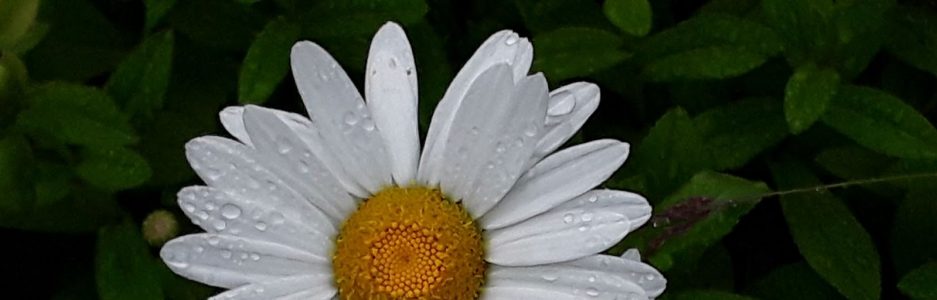

Last week, I was reminded of the importance of music. This reminder came in the form of a six-year-old girl named Lark. While Lark and I were working together on some expressive and receptive language tasks, she began to hum. I asked Lark if she could save the song for later and she shook her head “no.” I smiled and told her to sing to me. She replied, “Do you want the instrumental or vocal version?” I tried not to laugh. I knew Lark was bright, but I didn’t realize she was gleaming! And music made her shine. So, I told her to give me the instrumental version first, and then when we were done with the language tasks, she could also share the vocal version.
Lark began to hum and play her air piano. It was a sweet and upbeat melody. I wondered if she was actually playing the correct notes. I bet she was! After she performed for me, we went back to the task at hand, which was following oral directions. This is a skill that Lark is learning. She often goes where her musical mind takes her, and I was trying to help her become aware of when her mind wanders and how to regain attention. I’m not sure I succeeded. I think she understood what I was trying to tell her, but the pull of the music in her head was probably greater. When we completed the tasks, I sat back and let Lark serenade me with her lyrical song. It was about little flowers growing. Of course! What else would a girl named Lark sing about? I had to compose myself throughout her song because I felt like laughing and weeping at the same time. I had in front of me curiosity, imagination, and creative spark. I hoped that I could nurture it. I hoped I could make others see the power of Lark’s imagination.
This time with Lark made me think of my time as a classroom teacher many years ago. When I taught 2nd and 3rd grade, I deliberately found space in the day to add music: playing recorded music that reflected what the children were learning, collaborating as a class to compose lyrics about taking care of the earth, and creating musical show-and-tell sessions in which students showcased their instrumental and vocal explorations. There was a boy, Michael, in my 2nd grade class, like Lark, who loved to hum. He hummed all the time, even during quiet work time, which didn’t bother me, but did annoy his classmates. One day after school, Michael stayed after all his classmates had left. He told me that he wasn’t trying to be bad, he just had music playing in his head all the time. Songs just came to him. I told him that I understood, and we found a place in the classroom where he could sit where his humming would be less of a distraction to the others. I didn’t tell him he had to stop humming. I knew he had a gift, and I wanted to honor it.
I realized that many of my students took private music lessons, and I began having Friday music show and tell times. It was a wonderful sharing experience. Michael also played the violin beautifully, and as fate could have it, he grew up to become a concert violinist and played Carnegie Hall. I often think about what would have happened if I had squashed Michael’s musical talent. What if I treated his humming as a nuisance instead of a gift? It could be easy for a teacher to do. There’s so much on our plates, so much to teach, so much to learn. The artistic or creative can often be seen as superfluous, but actually they are essential, and they need time and space to grow.
 Word Dancer: Literature, the Arts, & Education
Joanne,
I totally agree w/ your point about music and love imagining Lark and the young violinist. I always enjoyed listening to speeches featuring music and recall one student who brought in a drum. He’s an accomplished pianist who recently played in Sweden as part of a classical music program. I had a colleague who taught French. She’d play her guitar and taught students to sing in French. I’d advise all teachers in training to study music. I wish I had.
LikeLiked by 1 person
Music is magic, as this post accentuates. Granted, not everyone responds as avidly as Lark. (What a perfect name; I wonder about her parents’ reasons for choosing that one.)
I certainly know that when we would be memorizing a poem, or even learning one, it was great fun to put it to music or just for a laugh to “sing” directions even in middle school to gain attention. So what if parents heard that the teacher was “kinda crazy?” They heard the smile in the comment, too!
And to have Michael actually see the fruits of his passion materialize on the stage of Carnegie Hall…chills! (Thank goodness for teachers who value the gifts children have and invite them to unwrap gladly.)
LikeLiked by 1 person
As a musician myself (two degrees in music) I am so happy to see a teacher including and valuing music in the classroom. For kids to play for their peers (and teachers!) is a wonderful experience for everyone. And how awesome that Michael grew up to be a concert violinist!
LikeLiked by 1 person
Your experience with Lark beautifully illustrates the profound impact music can have on children’s learning and creativity. By allowing her to express herself through music, you not only nurtured her talent but also highlighted the importance of integrating artistic expression into education.
LikeLiked by 1 person
Thank you for the twofer, Joanne, i.e. your accounts–and beautiful encouragement–of two wonderful musical kids in one post!
LikeLike
I love that you honor the talents of your students this way. And a singer named Lark is so fitting. I think it’s great that you can give them opportunities to sing ~ even write their own songs or make them up as they go. We need more music in our classrooms, that is for sure, and you give a powerful reminder of this today.
LikeLike
Joanne, this is so lovely. Lark is a darling name and for a singer too. Your honoring her contribution, yet also getting out the objectives of your lesson is top-notch pedagogy there. I loved reading about this and how what you learn translates into making it accessible for more students.
LikeLike