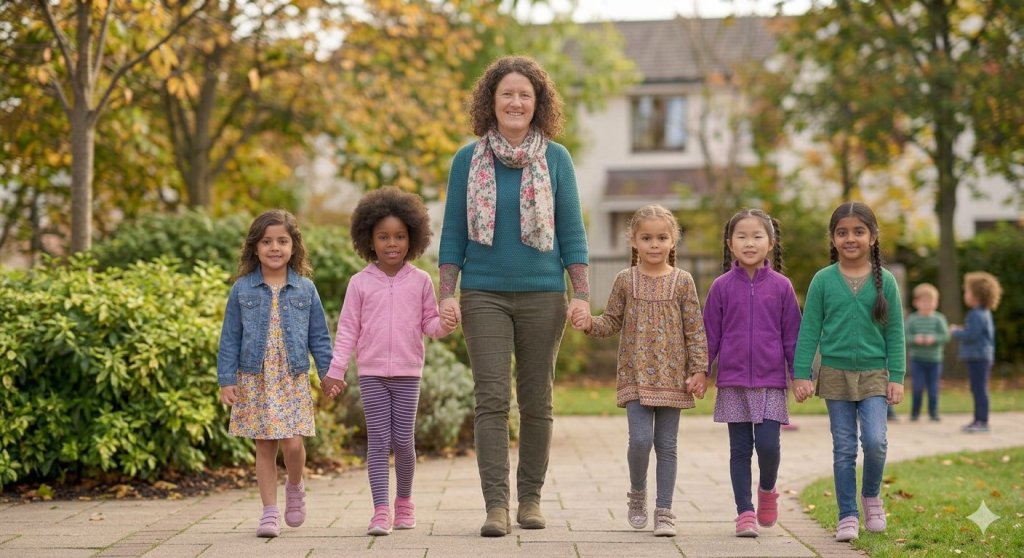
I look forward to September because I anticipate school starting and connecting with students. As a learning specialist, my number one job isn’t teaching a curriculum—it’s building trust. I know that connection is key. So, from day one, I seek to build connections that make them feel safe, seen, and heard. We have over two hundred students in our elementary school, and I try to remember each and every name. The tool I use to help me remember is to connect their names with their stories. When a student tells me a story about herself, I can more easily remember her name. These stories become the connective glue of the relationship I build with them and their parents.
The first day of this year, I reached out to a new student who looked a bit overwhelmed and tentative. Natalie is in 4th grade and moved from a public to our private girls’ school. It is a big culture shift. Natalie stood in the back of the line with her shoulders hunched to her ears. I could tell it was hard to navigate in the sea of new faces, so as we lined up and walked across campus to a whole-school assembly, I walked with Natalie and began a conversation. From the start, Natalie became animated. All she needed was an invitation to talk about herself. I commented on her beautiful outfit, and with the complete honesty of a nine-year-old, she said that her mother made her wear it. When I asked what she would have chosen to wear, Natalie replied, “Leggings and a t-shirt.” A perfectly understandable choice. As we walked, Natalie told me all about summer camp, her grandmother, and making crafts. I told Natalie that I created the Wonder Studio at school, and that it is a special crafting space students can go to during recess. Her eyes lit up, and I knew that our mutual interest was going to be the foundation of our relationship. As we got to the field house for the assembly, Natalie reached out, patted my hand, and said, “My grandma is my best friend.” I smiled and laughed to myself. In her friendly, sweet way, Natalie was telling me that we were going to be good school friends, and I was so happy that I could help her feel more comfortable on her first day in her new school.
While my connection with Natalie felt effortless, building that same rapport in a classroom setting isn’t always smooth sailing. This week, I was reminded of just how humbling this work can be when I collaborated with my long-time colleagues, Gina and Laura, to teach a second-grade lesson on the tools we need to learn best. My first attempt in Gina’s class felt flat and lifeless—easily one of my worst lessons in years. Comforting me, Gina said, “Don’t worry, it will be better in Laura’s class.” She was right. To turn it around, I used what I learned from Gina’s students and leveraged my deep connection with Laura’s class, some of whom I have known since PreK.
Instead of lecturing, I realized the children already had many of the answers. I opened with a simple question: “What helps us learn our best?” A student named Millie eagerly raised her hand and responded, “Heart! You need to be kind and listen to each other.” It wasn’t the answer I expected, but it was the most profound. From there, the children co-created the lesson. I gathered their ideas and wove them into a cohesive, interactive discussion.
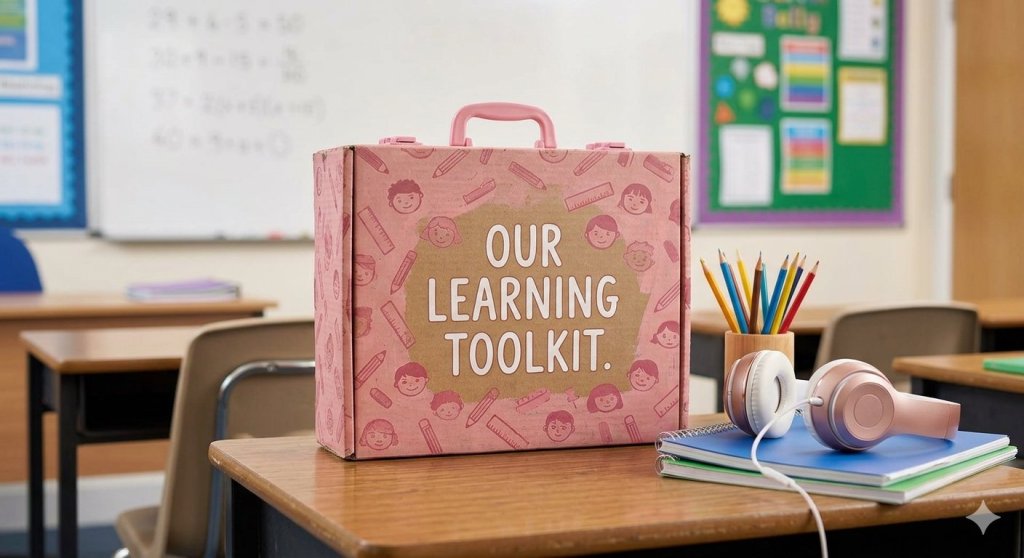
Seeking a second chance with Gina’s class, I designed a tangible way for students to visualize these learning tools. I bought two cardboard suitcases to serve as “Learning Toolkits.” I plan to fill them with tools for the mind and body, including headphones for focus, checklists, fidget tools, and—thanks to Millie—a tangible reminder to use our ‘hearts’ by being kind. My hope is that these toolkits will empower students to self-advocate, remember what they need, and learn better.
Ultimately, teaching isn’t about having all the answers; it’s about creating a space where students feel safe enough to share their ideas. Whether it’s a fourth grader opening up about her grandma or a second grader reminding us to learn with our hearts, the best lessons are always the ones we build together. As we head further into the school year, I’ll keep listening to their stories, packing our toolkits, and letting the children show me exactly what they need to thrive.


Your post makes me miss those classroom experiences. Taking the time to get to know each student is so worthwhile as is opening up to the class and allowing for their participation, as unpredictable as that may be. I love how Millie said “heart!” Such wisdom!
LikeLiked by 1 person