What is the thing that inspires you, sets you free, makes you happy? Some might say traveling, practicing a sport, making art, singing, gardening, or dancing. For me, it’s writing. Writing is my release and my joy. From the time I could hold a pencil, I wrote about the world around me and created fantasies sparked by my imagination. I wanted to express to others what I saw, heard, and felt. I was able to better understand my experiences and cope with any difficulties through writing. Poetry is my first love because it allows me to play with words, try out different poetic forms and devices. Poetry was like a playground for me. I could slide in a simile, mete out a metaphor, open minds with onomatopoeia. And as you can see, I love to use alliteration!
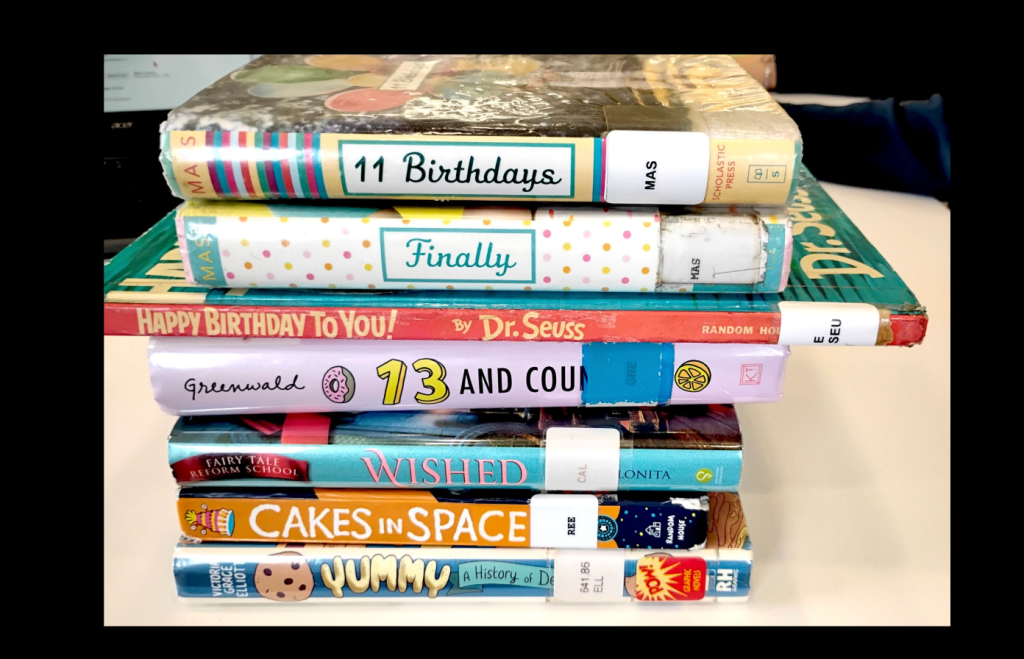
Now, equally enjoyable to me as writing is encouraging kids to write. This month, my dear friend, colleague, and school librarian, Deborah, invited me into her 4th and 5th-grade classes to mix library and poetry skills. I thought Book Spine Poetry would be the best vehicle for this foray into found poetry. For those of you who may be unfamiliar with the term, book spine poetry is a form of found poetry where the poet takes another person’s words (in this case, book titles) and forms their own poem. The beauty of book spine poetry is that it is a low-stakes way to introduce poetry writing. The poet becomes an editor of sorts, a connoisseur of the best titles that fit together to form a clever poetic message.
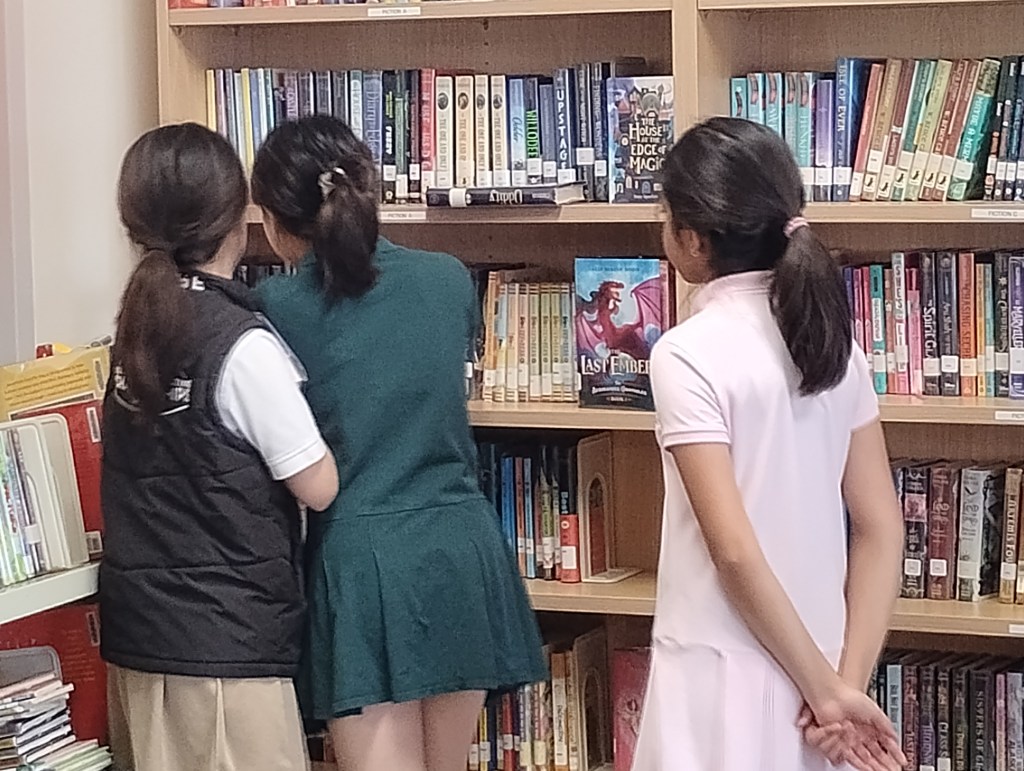
When the students gathered in the library. I quickly explained what they would be doing in class that day. I looked out into a sea of eager faces. They were already hooked. I told them that the goal was to stack books so the titles on their spines read like a poem from top to bottom. And the best part was that they didn’t have to write a single word. They just had to find the titles that make sense to themselves! But first, I explained the four steps of building book spine poetry, and they listened intently.
Four Easy Steps to Create Book Spine Poetry
EXPLORE: Browse many book spines and choose one or two that interest you or that speak to your heart.
GATHER: Find other book spines that complement your first choice. Don’t edit yet. Grab any spines that you think may work! Stop when you have 6-8 books.
PLAY: Start playing with combinations of spines, swapping and changing the order. Don’t settle with your first try! Experiment by putting your poem together like a puzzle and explore how changing the order changes the meaning of your poem.
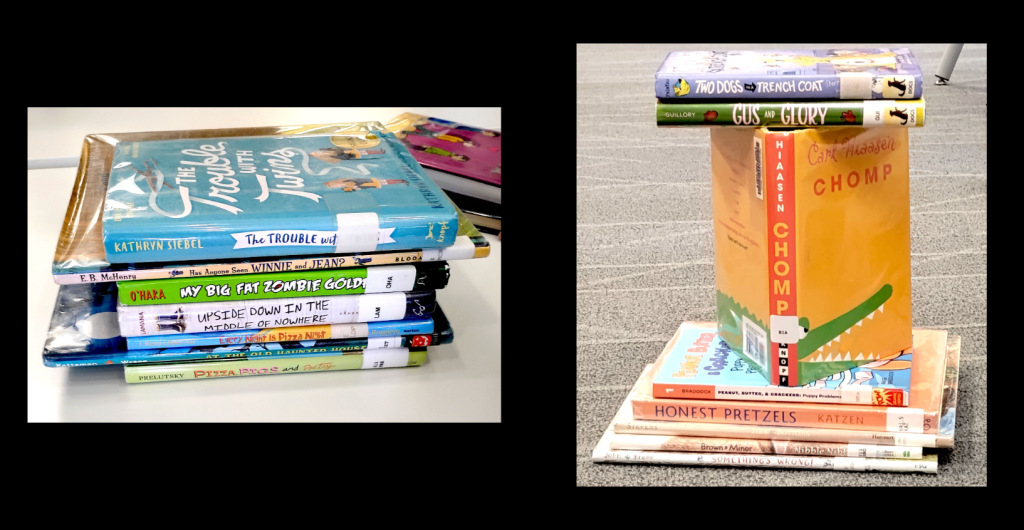
POLISH & SHARE: Read your poem aloud to yourself and to a partner. When it sounds right, snap a photo of your completed poem.
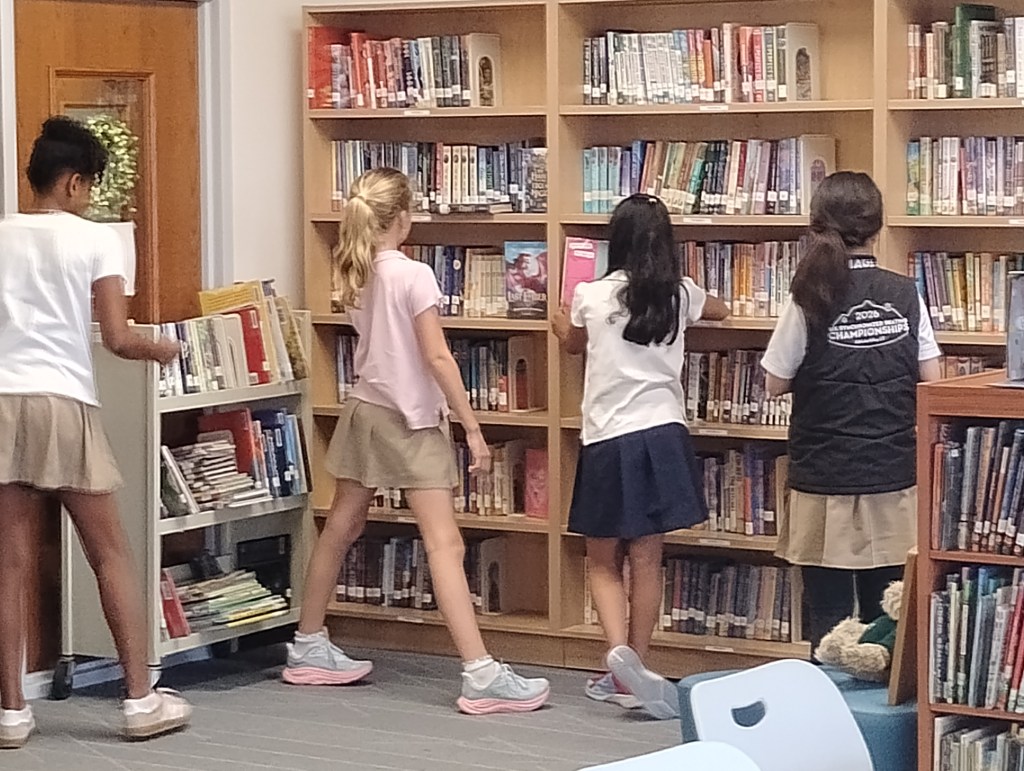
I modeled how to create the book spine poetry by asking six student volunteers to find titles of books that stood out to them. As each student brought me a book, I read out the title and arranged and rearranged the books, creating different ways to compose the poem. Having the kids actively engaged from the start was key to deepening their understanding of the process. Once we built a poem together and tried out different variations, the students were ready to go hunting for titles and build their poems. They were allowed to work by themselves, in pairs, or in groups of three.
Once I gave the signal, they were quickly off on their mission. No one was off task. Everyone knew the steps and quickly got to work. It was wonderful to see them remake their book stacks. They easily revised, which they did not normally do in their written work. I can see this kind of practice helpful in teaching editing and revising skills because there is no fear of changing their own words. The words are someone else’s, so the practice of revising is less personally sensitive. The students were busy throughout the thirty minutes they had to work and eager to share at the end of the session. No one hesitates to read their poems. In fact, many performed their poems, adding dramatic voices or hand motions.
Book spine poetry building not only teaches how to create a poem, but it also builds confidence and shows that writing is a joyful process. After class, many students stopped me in the hall to say they had continued writing book spine poetry using their classroom books or their books at home. That is the best message a teacher can receive – that their students continue to learn on their own.


This is fabulous in 100 different ways! I hadn’t heard the term, and now it’s got a pocket in my heart.
LikeLiked by 1 person
You are so very creative – this is a grand idea!!!
LikeLiked by 1 person
Loved this! Love the photos, too!
LikeLiked by 1 person
Eager, focused students at the end of the year is an amazing feat accomplished by a compelling task! Great idea.
LikeLiked by 1 person
Love the photo and love the spine poetry creations! What a fun way to “write!” And we don’t even have to lift a pencil.
LikeLiked by 1 person
Word Dancer,
Love that you are spreading your love of poetry to your students.
My two favorite parts:
“Poetry was like a playground for me. I could slide in a simile, mete out a metaphor, open minds with onomatopoeia. And as you can see, I love to use alliteration!”
and
“Book spine poetry building not only teaches how to create a poem, but it also builds confidence and shows that writing is a joyful process. After class, many students stopped me in the hall to say they had continued writing book spine poetry using their classroom books or their books at home. That is the best message a teacher can receive – that their students continue to learn on their own.”
Strong work!
LikeLiked by 1 person
I love book spine poetry! This has inspired me to play around with some book spine poetry in my notebook!
LikeLiked by 1 person