Last week, I started painting with watercolors again after several years. In the past, when I would take up a brush, the colors would blur into each other in a muddy puddle, and I would become very dissatisfied and down on myself. I had forgotten all the techniques I learned in my watercolor classes, and the ones I remembered were not helping at all. But I knew that to stay fresh and resilient, I had to take up something uncomfortable. I have done this all my teaching life so that I would never forget what it is to be a beginner. Learning is difficult and rewarding, but sometimes the difficult part holds the learner back. I wanted to lean into that discomfort so I could find myself through it and, in turn, help my students find their own paths through difficulties.
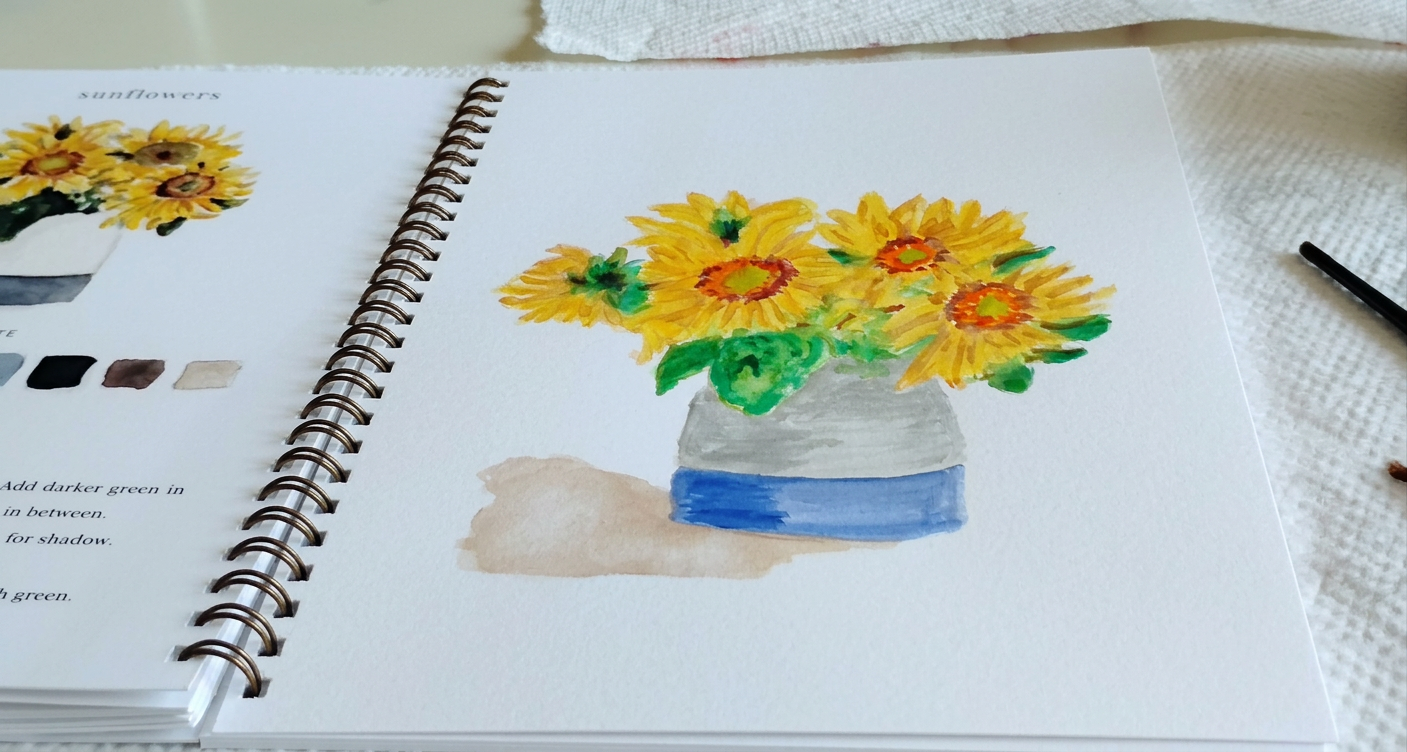
So this week, I chose the sunflower page of the Emily Lex Bouquet Workbook. I love sunflowers and thought they would be a good subject this time of year. Their golden yellow color allows me to hold on to the sunshine just a little longer. I followed the step-by-step directions at first, but then I started to make more individual decisions – leaving the flowers to then work on the vase. I shifted back and forth as I saw fit and did not adhere strictly to the direction steps as I did in my first piece. I was deliberately breaking the rules so I could venture out from a safe space. In my teaching, I’m thinking of ways to have scaffolds in place for students, especially around learning to write, and then allow them to break the rules in order for them to feel their own agency and independence. When teaching writing, I often first talk the process through with my student, then we jot down a rough web, outline, boxes, and bullets, and we see fit. But for some, those graphic organizers get in the way of generating writing, especially for students with low writing stamina. I often scribe the pre-writing for them, but then I’m afraid I’m taking the process away from them, and they will get the message that I am the owner of the pencil. While painting, I often looked across to Emily’s example and became very critical of my own strokes and shading choices. The workbook was indeed helping me to initiate, but I wanted to be very aware that I was still in control and the process would always entail mistakes.
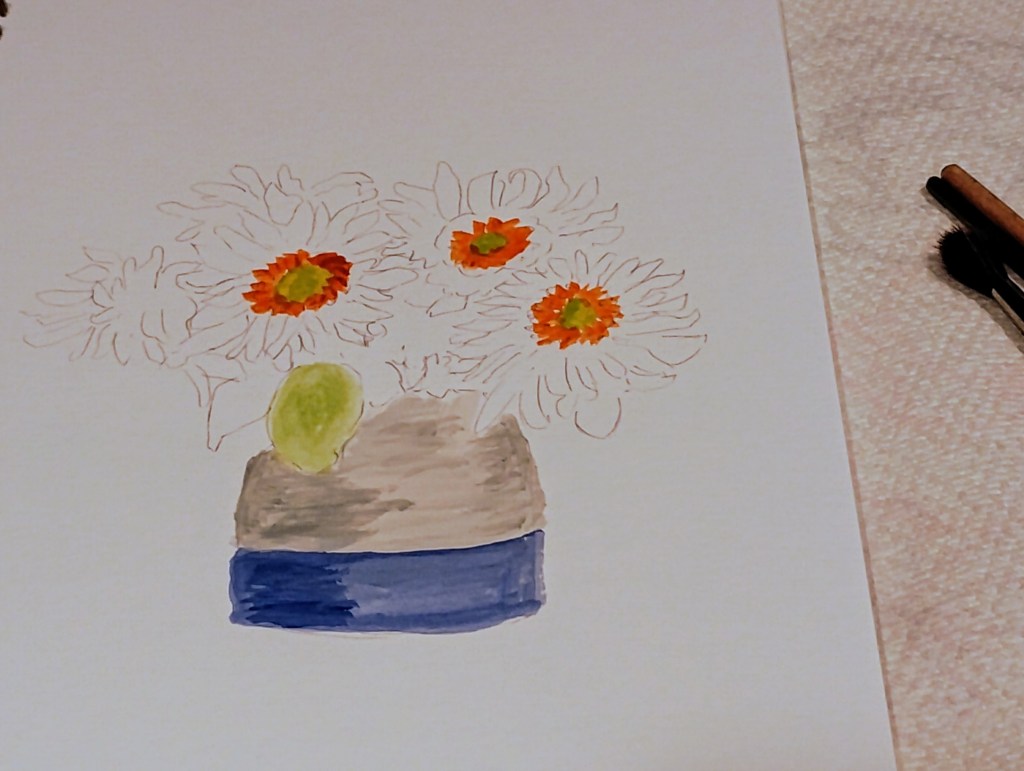
As I painted, I began to go out of order. I painted two of the three sunflowers and then decided to work on the vase. As I painted the gray and blue vase, I realized it was darker than the original version. I stepped back and had to decide if I liked that difference or not. I did like it darker, but as I looked, I realized that if I lighted the middle part of the vase, I could create some more dimensionality, making the vase look less flat and stuck to the page. These decisions are part of the creative process, whether when painting or writing. When I work with students on writing, I want to keep in mind to encourage them to make decisions for themselves. Help them see the choices they have in front of them and open up their writing, so they feel confident in telling their stories.
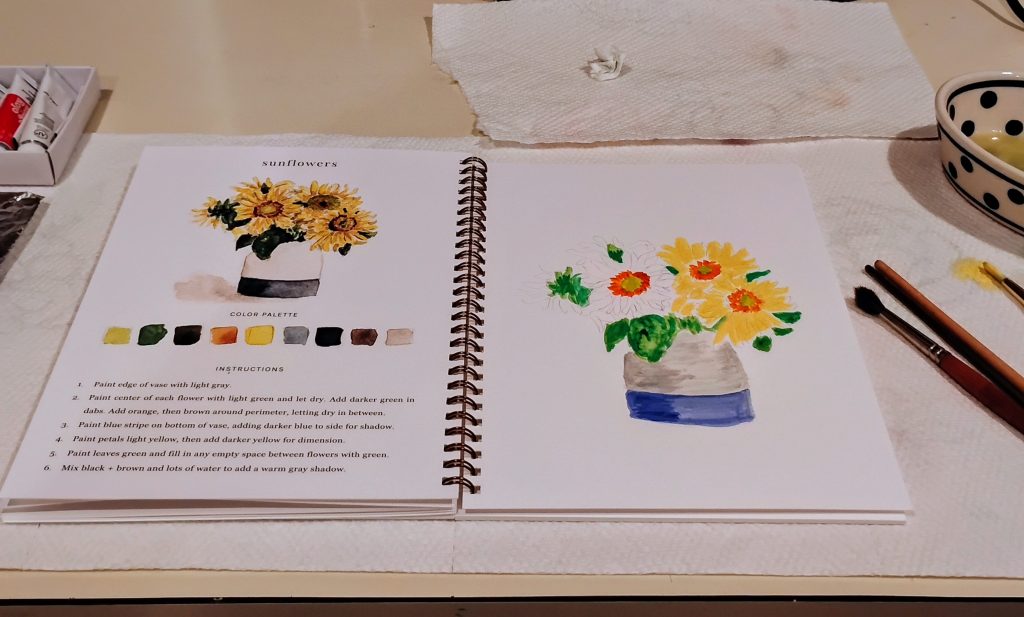
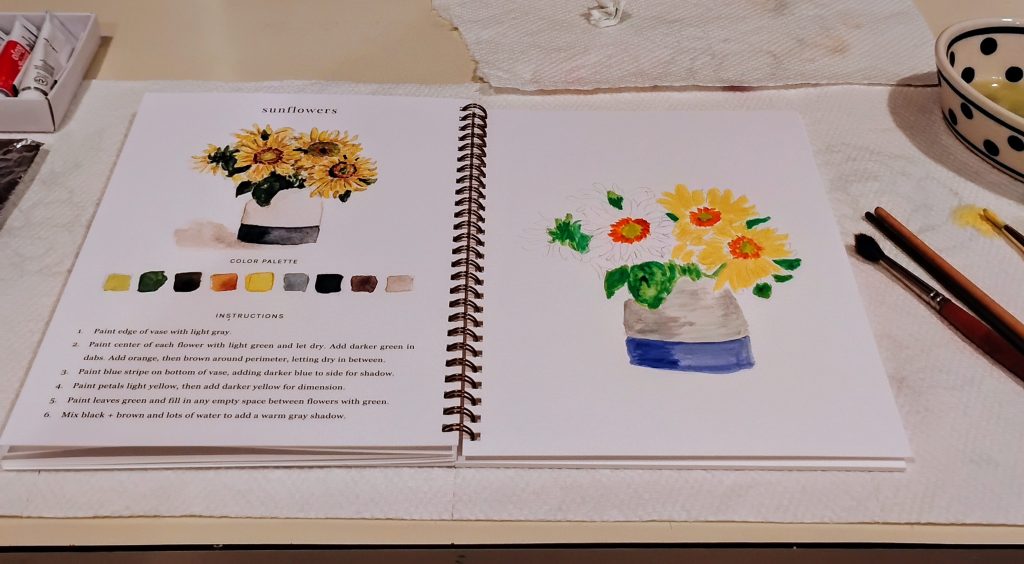
My final product was bright and cheerful. I changed the color of the band at the bottom of the vase; the top part is dove gray rather than dover white, and my sunflowers have a bright marigold hue instead of the original’s earthy browns. Even though this is still a workbook page, I can see the small glimmers of autonomy. I know I will have to paint consistently to stay on this road to imperfection. I have to keep telling myself the mistakes are beautiful and part of the process. The wonderful thing about leaning into being a beginner is that it gives me so much insight into teaching and helping my students through the learning process.


Word Dancer,
Thank you for this lovely reflection on teaching and learning. Your post brought back some good memories of discussions I had with my sixth graders years ago after I switched to a new yoga studio. The classes were much faster than I was used to. I had great conversations with my classes who had recently transitioned to middle school, and like me, were missing their old teachers, the slower pace of elementary school and the competency they felt there.
I enjoyed hearing about your thought process as you pushed your self as a painter. Thanks for the reminder to lean into learning as a beginner.
LikeLike
How quickly we go to wanting perfection. I love how you connect your painting to your students’ writing and the reminder to “lean into the learning.”
LikeLike